Bedding · Fiber guide
Mulberry West Silk Blankets and Cashmere: How the Fibers Differ
Silk and cashmere share a reputation for lightness and luxury. But they create different kinds of comfort: one is known for a smooth, breathable surface; the other for soft insulation that holds warmth close. Knowing how each fiber behaves makes it easier to choose a blanket—or layer the two with care.
A blanket can look like a simple thing: a rectangle of fabric, folded at the end of a bed or drawn over the shoulders on a cool evening. Yet the fiber inside that rectangle changes how it feels, how it manages heat, and what it asks of its owner. Silk and cashmere are both natural fibers associated with comfort, but treating them as interchangeable because they are soft misses the point.
Silk tends to feel smooth and cool at first touch, with a fluid drape and a fine surface. Cashmere is usually valued for a softer, more insulating hand: it can feel warm without the heft of a thick wool blanket. Neither fiber guarantees a particular level of warmth or performance on its own. Weave, density, finishing, size, and the conditions of use all matter.
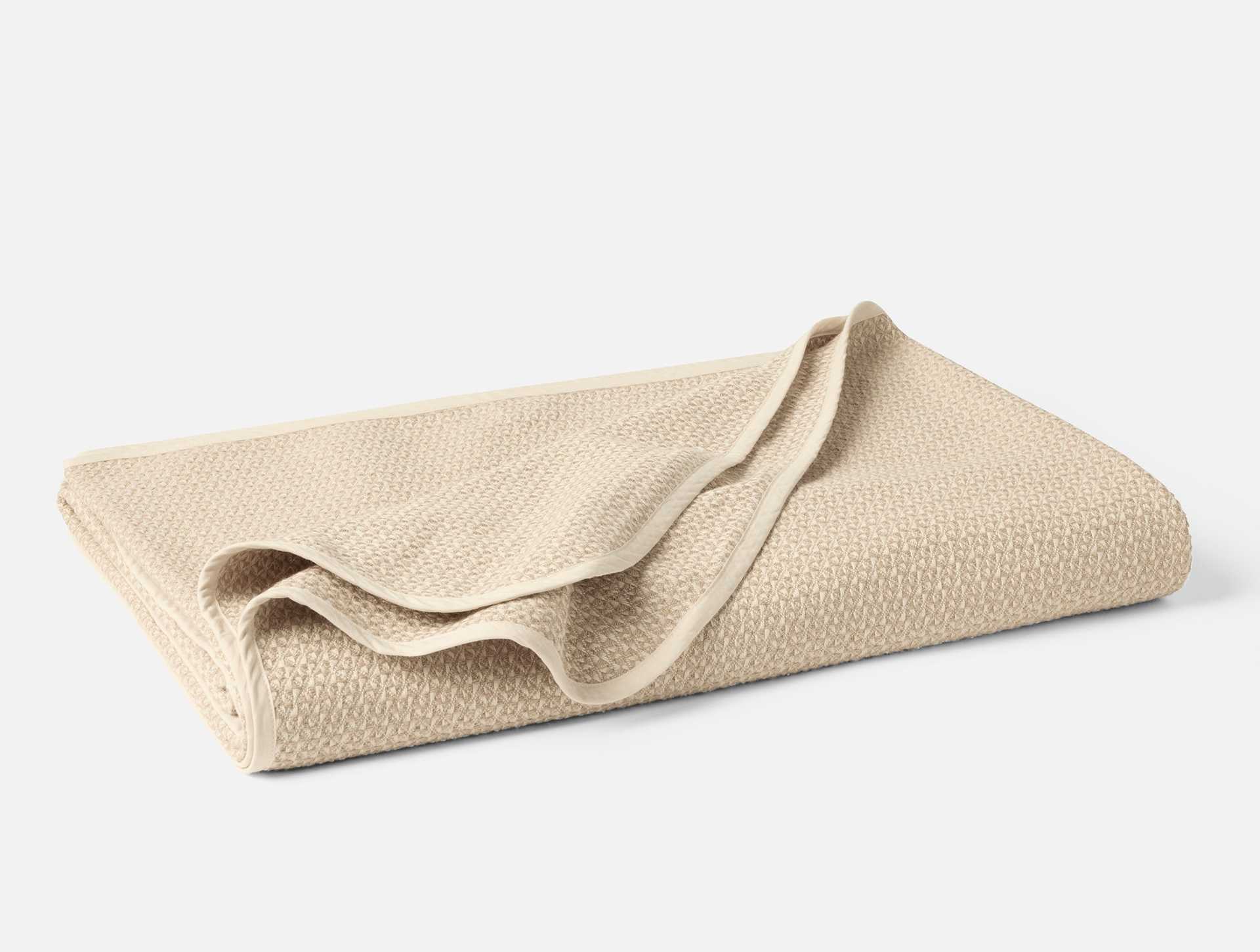
A pure-silk blanket from Mulberry West offers a useful reference for understanding silk in bedding. Its product description identifies it as a 100% mulberry-silk blanket with a 75-gram fill, satin trim, and temperature-regulating qualities. It also states that the materials were independently tested for formaldehyde and lead. Those are product-specific details, not universal properties of all silk blankets. The blanket is listed as unavailable in several sizes in the supplied information, so its specifications are best read as an example rather than a current buying recommendation. See the Mulberry West silk blanket details.
Two fibers, two different origins
Silk is a filament fiber produced by silkworms as they form cocoons. In conventional silk production, the continuous filaments are reeled from cocoons and processed into yarn. Mulberry silk refers to silk made by silkworms fed primarily on mulberry leaves. The term describes a source and production context; it does not, by itself, tell you the blanket’s weight, weave, finish, or how it will feel after use.
Cashmere comes from the fine undercoat of cashmere goats. The fiber is collected during the animals’ seasonal shedding or through combing, then separated from coarser guard hairs before it is spun. Quality depends on more than the word “cashmere” on a label. Fiber fineness and length, the amount of usable undercoat, yarn construction, and finishing all influence softness, durability, and the likelihood of pilling.
Neither name is a complete performance specification. “Silk” does not automatically mean cool in every room, and “cashmere” does not mean that every blanket will be exceptionally warm. A dense silk-filled comforter and a lightweight cashmere throw are different objects, even though each uses a luxury fiber. The useful comparison starts with construction and intended use, then considers the material.
Feel: sleek drape or soft loft?
The first difference is tactile. Silk fibers are smooth, and woven silk fabrics often have a sleek surface and a graceful drape. A silk blanket may feel supple as it settles over a bed. Some silk-filled designs have a less slippery outer shell, so the cover fabric matters just as much as the fill. Labels should clarify whether silk is used in the shell, the filling, or both.
Cashmere is prized for its fine, soft feel. In a blanket, the result depends on how the fiber is spun and woven or knitted. A smooth, closely woven cashmere blanket can feel refined and fluid; a brushed or loftier construction may feel more cloudlike. Cashmere can pill through friction, especially where fabric rubs against itself or other textiles. Pilling is not necessarily a sign that a fiber is fake or defective, though persistent shedding or weak construction warrants attention.
“Soft” is not a technical measurement. A person who prefers a cool, smooth touch may gravitate toward silk; someone who wants a more enveloping, wool-like softness may prefer cashmere. Skin sensitivity is personal, too. Natural fibers are not automatically suitable for everyone, and a blanket’s dyes, finishes, seams, and contact with other bedding can affect comfort.
Warmth: insulation is a system
Cashmere’s warmth is associated with the fine fibers and the air held within a textile’s structure. Trapped air slows heat loss, which is why a light cashmere layer can feel notably warm for its weight. But the fiber content alone cannot tell you exactly how warm a blanket will be. A loose knit, a dense twill, a brushed surface, and a layered construction will behave differently.
Silk can also provide insulation, particularly when used as a fill that holds air within a quilted or otherwise structured blanket. Its reputation for temperature regulation reflects its ability to provide a light layer while allowing some movement of heat and moisture. It should not be read as a guarantee that silk will keep every sleeper at a perfectly steady temperature. Room temperature, pajamas, mattress and duvet layers, and individual comfort all play a part.
The Mulberry West example is described as a 75-gram-fill blanket intended to offer lightweight warmth. That number is useful only in context: fill weight is one specification, not a complete measure of warmth. Dimensions, construction, the fabric enclosing the fill, and the sleeper’s climate and preferences also matter. A “75-gram” figure should not be compared with the weight of a woven cashmere blanket as though the two figures measured the same thing.
For a warmer bed, a cashmere layer may make sense when the goal is soft, close insulation. Silk may suit someone seeking a lighter layer with a smooth drape or a breathable filling. In either case, consider the blanket as one part of a bedding system rather than a standalone answer to every temperature change.
Breathability and moisture
Breathability describes how readily air and water vapor can move through a textile. It is shaped by the fiber, yarn, weave, knit, and finishing. Silk is often appreciated for its fine, lightweight feel and ability to work across seasons. Mulberry West describes its silk blanket as porous and ventilating, with moisture absorption intended to support comfort. That is a product description; actual experience will vary with construction and the user.
Cashmere is insulating, but insulation does not necessarily mean stuffiness. A fine, relatively light cashmere textile may be comfortable in changing conditions, especially when used as a removable top layer. Still, dense construction can hold more warmth, and a person who sleeps hot may find a substantial cashmere blanket too warm in a heated room.
It helps to distinguish fiber-level tendencies from whole-product performance. A breathable fiber in a tightly built, heavy blanket may not feel as airy as expected. A lighter construction can improve air movement, while a lining or backing may change the way a blanket feels against the body. When product details are available, look for weight, structure, shell composition, and care guidance—not just the material name.
Care: follow the label, not the legend
Silk and cashmere both deserve deliberate care, but neither has one universal cleaning rule. The manufacturer’s care label takes precedence over broad advice about the fiber. Some silk bedding is washable; other pieces are dry-clean only. Cashmere products also vary, and a blanket’s size, weave, dyes, trims, and finishing may limit home washing.
The Mulberry West blanket is described as easy to clean, but the available product information does not provide a detailed washing method. That is not enough to infer that it belongs in a standard wash cycle. Before cleaning any silk blanket, check the actual care instructions. A professional cleaner experienced with silk may be appropriate when the label calls for dry cleaning or when the item is too valuable or bulky to risk at home.
Cashmere is vulnerable to abrasion and changes in shape if handled roughly. If its label permits hand washing, use the specified method, avoid wringing, and support the blanket while it is wet. If the label recommends professional cleaning, follow that instruction. Do not assume that advice for a small cashmere sweater applies to a full-size blanket.
Between cleanings, airing a blanket in a shaded, well-ventilated space can help it feel fresh. Avoid prolonged direct sunlight, which may affect delicate fibers and dyes. Store clean, fully dry blankets in a cool, dry place. For cashmere and other animal fibers, secure storage can help reduce exposure to textile pests. Cedar or lavender may be used as part of a storage routine, but they do not replace clean storage and regular inspection.
Can silk and cashmere be layered?
Yes, in principle: separate layers let a sleeper adjust warmth without asking one textile to do everything. A silk blanket can sit beneath or above a cashmere layer, depending on the feel and look desired. The practical test is whether the layers stay in place, breathe comfortably, and can be maintained according to their different care needs.
Try a simple arrangement before committing to a permanent setup. Place the smoother, lighter layer closer to the body if that feels comfortable, then add cashmere where extra warmth is needed. In another room or season, the order may be reversed. There is no universal rule about which fiber belongs on top; drape, friction, and personal preference determine what works.
Friction is worth considering. A silk surface beneath a textured or loosely finished layer may shift, while a heavy layer pressing on a delicate textile can contribute to wear over time. Shake out and fold the blankets separately, rather than pulling them sharply against each other. If one layer has a tendency to shed or pill, avoid prolonged rubbing with the other.
Layering also complicates laundry. Silk and cashmere may require different care, so treat them as separate pieces rather than washing a stack together. Remove stains promptly according to each blanket’s instructions; aggressive spot treatments can create discoloration or damage. A bedding system is only as convenient as its most demanding layer.
How to choose between them
The better choice is the fiber that suits the room, the sleeper, and the routine. Before deciding, ask what the blanket is expected to do. Is it a light cover for a warm bedroom, an extra layer for a cold night, a throw for a chair, or a textile that will be washed frequently? The answer can matter more than the prestige attached to a fiber.
- Choose silk as a starting point if a smooth surface, fluid drape, and lightweight layer are the priorities. Confirm whether silk is the fill, the shell, or both.
- Consider cashmere when soft, lightweight insulation is the main goal and you are comfortable following the care requirements of a delicate animal fiber.
- Compare construction rather than relying on a fiber name alone. Look for weave or knit, dimensions, weight, edge finishing, and any lining or fill details.
- Check care instructions before purchase or use. A blanket that needs professional cleaning may be less convenient for daily use than one with straightforward laundering guidance.
- Be precise about claims. Terms such as “temperature regulating,” “hypoallergenic,” or “pure” should be understood in context, with attention to the specific product and the evidence supplied.
Cost is another consideration, but price does not reveal the entire story. The fiber’s grade, provenance, processing, craftsmanship, and supply chain can all affect a blanket’s price. A high price does not automatically prove superior durability, ethical sourcing, or comfort. Look for specific, verifiable details and consider whether the blanket’s likely use justifies its care and replacement costs.
A note on labels and sourcing
Clear labeling should identify fiber content and, where relevant, distinguish the outer fabric from the fill. A blanket advertised as silk may contain silk only in one component, while a cashmere blend should state the proportions of its fibers. Origin statements can describe where fiber was sourced, where yarn was spun, or where the finished blanket was woven; those are not necessarily the same place.
Certifications and testing claims should also be read precisely. A certificate may apply to a particular material, production stage, or facility rather than every aspect of a finished product. In the Mulberry West description, independent testing for formaldehyde and lead is a specific claim about the product materials. It should not be generalized to all silk bedding, nor should a single test be taken as a full assessment of environmental or labor practices.
Cashmere sourcing raises its own questions, including animal welfare, land management, fiber traceability, and processing. Silk production has distinct environmental and labor considerations. Neither fiber is automatically sustainable simply because it is natural. Responsible evaluation starts with transparent information about materials and production, and recognizes that the quality of available disclosure differs from one maker to another.
The practical verdict
Silk and cashmere offer overlapping comforts, not identical ones. Silk is often the smoother, more fluid and lightweight option; cashmere is often the softer, more insulating one. In both cases, construction can amplify or soften those tendencies. A blanket’s behavior emerges from the whole textile, not a single word on its label.
Mulberry West’s pure-silk blanket illustrates why the details matter: the product is described as a 100% mulberry-silk, 75-gram-fill blanket with satin trim and a breathable, temperature-conscious design. Cashmere presents a different route to light warmth, through fine fibers and a soft structure that can hold insulating air. Someone choosing between them should consider how warm they sleep, what texture they enjoy, and how much care they are willing to give a delicate blanket.
And if the answer is both, layering can make sense. Keep the layers separate, let each serve its own purpose, and care for each according to its label. The result is less a contest between luxury fibers than a more useful idea: comfort is adjustable, and the best blanket is the one whose feel, warmth, and upkeep fit real life.